Ask most people what a medieval peasant ate and you will get a shrug, a joke about mud, or a picture of a whole roast boar being dragged into a smoky hall. The boar belonged to the lord. The peasant had bread, ale, and a pot of something simmering over the fire. That pot, and the grain that went into it, shaped daily life for the vast majority of people in medieval Europe.
What follows is a plain guide to that everyday diet: the foods that appeared most often, the seasons that emptied the larder, and the regional differences that meant a peasant in Norfolk and a peasant in Provence sat down to quite different meals.
The Grain That Held Everything Together
Bread and porridge were the backbone of the peasant diet. Cereal grains supplied the bulk of calories — often the great majority of them — and everything else was a supplement. The grain itself varied by region and by soil: wheat where the land was good, rye where it was poor or cold, barley and oats where wheat struggled.
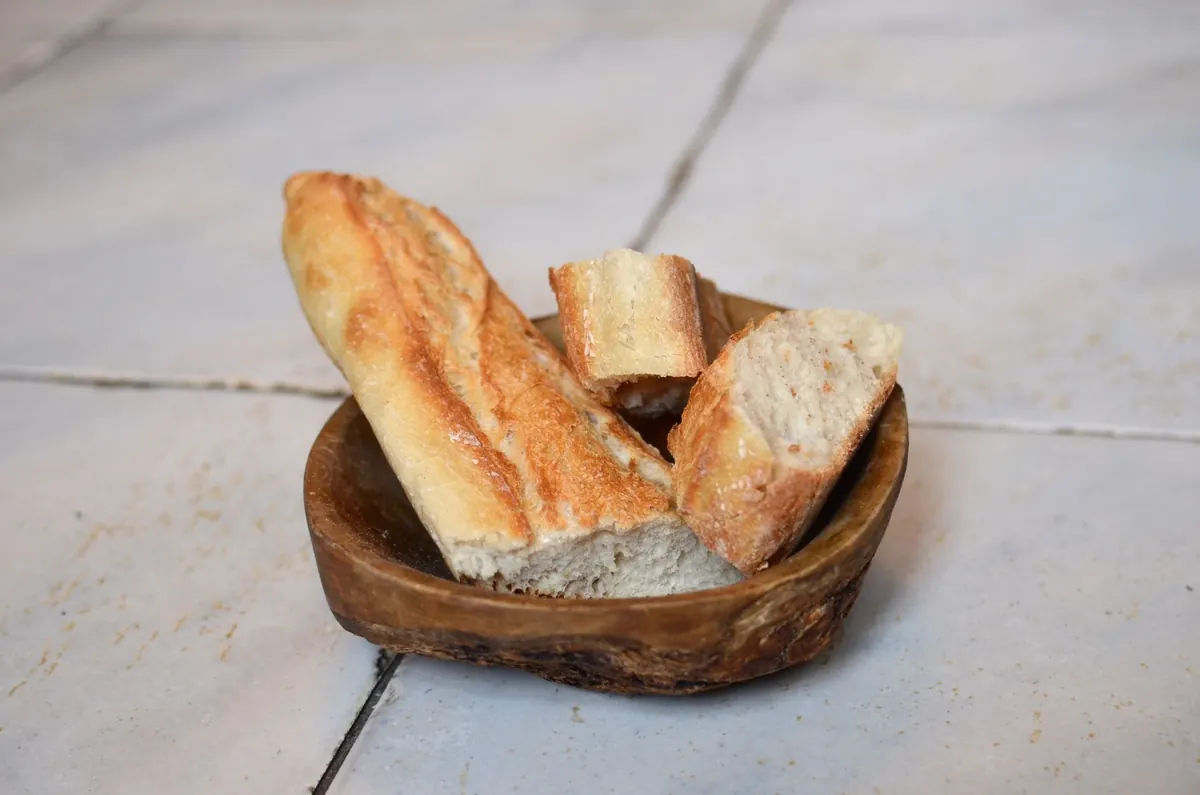
Not all bread was equal. Fine white wheat bread was a luxury, mostly for towns, lords and feast days. Peasants ate darker, coarser loaves, often mixed with rye, barley or beans. These loaves were dense and heavy, and they went stale quickly, which is one reason pottage mattered so much. Bread was also a bowl, a plate and a thickener in its own right.
Porridge and frumenty — grain boiled in water or milk, sometimes with peas or beans — filled the gap when bread was short. In much of northern Europe, oats were the everyday grain, and oat porridge, oat bread and oat ale were ordinary in a way that would look familiar to a modern breakfast table.
The Ever-Present Pottage
If you want one image of the medieval peasant kitchen, take the cauldron. Pottage was a thick, slow-cooked stew of whatever grain, vegetables, herbs and occasionally meat could be found. It might be made with peas, beans, oats, barley, leeks, onions, cabbage, turnips or root vegetables. It was cheap, flexible, and could be stretched by adding water or more grain.
Meat was not unknown, but for most peasants it was occasional rather than daily. A household might keep a pig, kill it in late autumn, and salt the meat to last through winter. Chickens provided eggs more often than flesh. Bacon or salted pork might flavour a pot of beans rather than sit at the centre of the plate. Fish mattered where there was water and where the Church's fasting rules applied — Fridays and other abstinence days pushed people toward fish, eggs or vegetables instead of meat.
What Came from the Garden, Field and Hedge
A peasant household did not separate vegetables from medicine from flavour the way we might. The garden, the field edges and the hedgerows were all food sources.
- Garden crops: leeks, onions, garlic, cabbage, peas, beans, turnips, parsnips and root vegetables.
- Field and hedge: nuts, berries, wild greens, mushrooms and whatever fruit grew nearby.
- Orchard and vine: apples, pears, plums and, in the south, grapes — often dried, pressed or preserved rather than eaten fresh.
- Dairy: milk, cheese and butter, especially in pastoral regions, though fresh milk spoiled quickly and was often turned into cheese instead.
Preservation was the year's real work. Salting, smoking, drying, pickling and fermenting turned a summer surplus into winter survival. Cabbage became sauerkraut in parts of central Europe. Herbs and salt carried flavour where fat and sugar were scarce. Honey was the main sweetener where sugar was an expensive import.
Ale, Water and What People Drank
Ale was the everyday drink for many people, including children, in much of northern Europe. It was brewed at home from barley or oats, usually weak by modern standards, and it provided calories as well as something safer-tasting than dubious water. Water was drunk too, especially where it was clean, but ale and beer carried social weight: brewing was often women's work, and the quality of a household's ale was a matter of local reputation.
Wine was the ordinary drink in Mediterranean regions, often watered down. Cider and perry appeared where apples and pears grew. Milk was drunk in pastoral areas, but it soured fast and was more often made into cheese, butter or curds.
Hunger Had a Calendar
The hardest stretch of the year was not deep winter but late winter and early spring. By then the stored grain was running low, the preserved meat was nearly gone, and the new crops were not yet ready. This was the "hungry gap," and it shaped how peasants planned, cooked and rationed.
The rhythm of the farming year dictated the diet:
- Late summer and autumn: harvest, abundance, fresh vegetables and fruit, and the slaughter of animals that could not be fed through winter.
- Early winter: salted and smoked meat, stored grain, dried peas and beans, and the first brewing of strong ale.
- Late winter: shrinking stores, thinner pottage, more reliance on beans, peas and whatever could be foraged.
- Spring: the hungry gap, eased by wild greens, eggs and the first milk from animals that had given birth.
- Early summer: relief as gardens and fields began to produce again.
Bad weather could turn a difficult spring into a famine. A failed harvest did not just mean less bread; it meant less seed for the next year, weaker animals, and higher prices in the market. Peasant diet was therefore not a fixed menu but a gamble on the weather.
Regional Differences Matter More Than You Think
There was no single "medieval peasant diet." Land, climate and local custom decided what was on the table.
Northern Europe
Oats, rye, barley, ale, pork, bacon and root vegetables dominated. Dairy was important in pastoral areas, and butter and cheese were everyday foods rather than luxuries.
Mediterranean Europe
Wheat bread, olive oil, wine, beans, chickpeas and vegetables such as cabbage and onions formed the base. Pork and mutton appeared more often than in the north, and the climate allowed a wider range of fresh produce through the year.
Upland and Pastoral Regions
Where grain grew poorly, herds mattered more. Cheese, butter, milk, and meat from sheep, goats and cattle carried more of the diet, traded for grain from the lowlands.
Towns and the Edges of the Manor
Townspeople, even poor ones, had access to markets, bakeries and a wider range of bought food than a remote village household. The further a peasant lived from a market, the more the diet depended on what the household could grow, raise or gather itself.
How to Read a Peasant Meal Today
If you want to understand what was really eaten, look past the feast-day paintings. Start with grain, then add the pot, then ask what season it is. A peasant meal was usually bread or porridge, ale or watered wine, and a vegetable pottage flavoured with whatever was available — bacon, herbs, salt, or nothing much at all.
Two practical habits will help you make sense of any source you meet. First, check the calendar: a menu from October tells a very different story from one in March. Second, check the landscape: a coastal village, a chalk downland and a mountain valley produced three different diets from the same century.
For readers curious about their own ancestry or a local history project, the useful next step is to look at manorial records, household accounts and archaeological remains from your area. They will not give you a neat weekly menu, but they will show what was grown, stored and thrown away — and that is often more revealing than any list of dishes.
Photo: Skylar Kang / Pexels