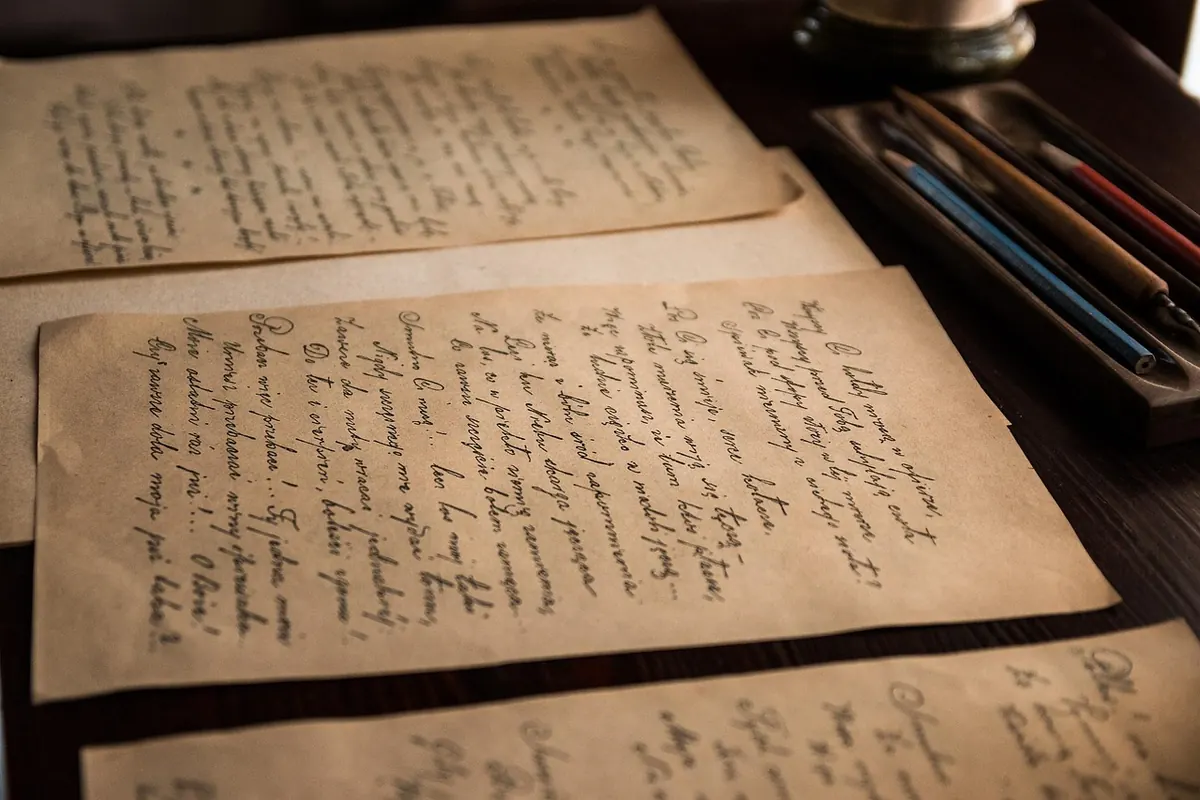
Every English village leaves a paper trail, and it runs longer than most people expect. The first mention of your parish may sit in a twelfth-century charter; the last manorial court roll may be dated 1920. Between those two points lie court rolls, rentals, wills, tax returns and thousands of parish register entries, the great majority of them held within an hour's drive of the village itself. The difficulty is not that the records are lost. It is knowing which office holds what, and in which order to look.
Start Where the Records Were Made
English archives follow geography, not convenience. Parish registers, manorial rolls, tithe maps and most probate records for a village ended up in the county record office for that county, usually in the county town. That is your first call, and it is worth a phone call or an email before you go.
A few complications are worth knowing. Some historic counties now have more than one archive: Yorkshire's collections are split between North Yorkshire, West Yorkshire and the East Riding, and the old county of Middlesex sits largely within the London archives. Manorial records sometimes travelled with the lord's family instead, so the court rolls for a manor in one county can end up in an estate collection three counties away. Occasionally a parish still keeps its own early registers. Ask the archivist directly whether the parish and manor collections for your village are held there. Most record offices publish an online catalogue, but the catalogues are rarely complete at item level, and a conversation often saves a wasted journey.
Manorial Records: The Spine of Village History
For landholding before 1700, the manor is where village history actually lives. The lord's court met several times a year and kept a roll of its business. Admissions and surrenders of copyhold land, heriots paid on a tenant's death, fines, amercements, encroachments on the waste, the alehouse kept without licence: all of it went onto the roll. A continuous run of court rolls is the closest thing England has to a village land register, and in many places it records ordinary families by name long before the parish registers begin.
Alongside the rolls you may find a custumal or survey, which lists tenants and their holdings at a single date, and rentals and reeves' accounts, which give money values rather than names. Not every manor has a full series. A manor with rolls surviving for most years between 1350 and 1600 is a good manor; a dozen scattered rolls is more typical. The Manorial Documents Register, maintained by The National Archives, records where manorial records are held, and is searchable online for a growing number of counties, so it is worth checking before you write to the wrong office.
Parish Registers and the Paper Around Them
Parish registers began in 1538 under Thomas Cromwell's injunction, though most surviving volumes start later, in Elizabeth I's reign. Bishops' transcripts, annual copies sent to the diocesan registry, begin in 1598 and sometimes fill gaps where the original register has perished. Remember that registers record baptisms, marriages and burials, not births and deaths, and that dates before 1752 follow the old calendar, in which the year began on 25 March.
The registers are only part of the parish chest. Churchwardens' accounts, vestry minutes, overseers of the poor accounts and settlement examinations describe the village economy in detail: a bridge repaired, a shilling paid to a soldier's widow, a labourer removed to the parish where he held a settlement. These documents are usually catalogued under the parish name, sometimes in the record office, sometimes still held by the incumbent. Many register images are now available through commercial subscription sites, but the bishop's transcripts and the surrounding parish papers generally require a visit.
National Collections and Printed Editions
Some of the most useful records sit outside the county altogether, and a good deal of the work has already been done for you in print.
- The National Archives at Kew holds central government records, and its Discovery catalogue searches the holdings of hundreds of other archives at the same time. It is the fastest way to find out whether a document you want exists at all.
- Domesday Book (1086) covers most of England and has been published in county volumes with translation and notes. It will name your village and its lord, and sometimes its tenants.
- Tax records include the lay subsidies from the late thirteenth century, the poll taxes of 1377 to 1381, and the hearth tax of 1662 to 1689. These give names and, in the hearth tax, a rough count of houses.
- Probate records, mostly wills and household inventories proved in the church courts, are gold for the sixteenth and seventeenth centuries. An inventory lists beds, brass pots, a plough, a cow, often with values.
- Tithe maps and apportionments (from 1836) and enclosure awards and maps name every field and its occupier. The map is nineteenth-century; the field names are frequently medieval.
- Printed editions such as the Victoria County History, county record society volumes and British History Online can save days of transcribing. Check them before you order an original.
Learning to Read What You Find
Medieval and early modern documents can look impenetrable, and they are not. Court rolls and church court papers before 1733 are usually in Latin, but the Latin is formulaic. Handwriting shifts from court hand and secretary hand to a rounder, more familiar script across the seventeenth century.
Work backwards. Take a page from 1700 on the manor you are studying, learn its phrases by heart, then step back fifty years at a time. Copy out the whole document rather than picking at single words; the sense of a formulaic passage often reveals the word you cannot read. Free palaeography tutorials exist online, including one from The National Archives, and local archives and university continuing education departments run short courses. Keep a notebook of recurring phrases and place-name spellings, and photograph documents to transcribe at leisure.
A First Visit, Step by Step
- Choose one question, not five. "Who held the copyhold farm called Hall Place in 1600?" will carry you through a whole day.
- Search the archive's online catalogue for the parish, the manor and any named estate, and note the full reference numbers.
- Email the archivist. Ask what is held, what is uncatalogued, and whether documents must be ordered in advance from an off-site store.
- Book a seat if the search room requires it, and request your documents early. Strongrooms are often cold and slow to fetch from.
- Take a pencil, a notebook, a camera and change for the locker. Pens and bags usually stay outside.
- Write the full reference on a sheet of paper and photograph it with every document. You will not remember it in three weeks.
- Ask about the tithe map and enclosure award for the parish even if your interest is medieval. They will give you the shape of the village and the names of its fields.
Expect gaps. Parish registers burn, damp destroys rolls, and no archive holds a complete series for any village. The practical answer is patience and a paper trail of your own: a running list of what you have checked, where, and on what date. Half the discoveries in local history come from re-reading a document you dismissed a year earlier, now that you know what the names in it mean.
Photo: jarmoluk / Pixabay