Every medieval pedigree has a weak joint. Sometimes it is a name that looks solid on a printed chart and falls apart the moment you read the original deed. Sometimes it is a date copied from a Victorian county history and repeated so often that nobody thinks to check it. Tracing a family back into the Middle Ages is hard work: fewer records survive, the handwriting is unforgiving, and centuries of other people's confident guesses sit between you and the evidence. These are the errors that trip up researchers most often, and the habits that keep a pedigree honest.
The Surname Trap: Names Before They Settled
Modern researchers treat a surname as a fixed label attached to a bloodline. Medieval people did not. Before hereditary surnames settled — a process that ran at different speeds across Europe, roughly from the twelfth to the fourteenth century — most people carried a single given name plus a byname describing where they lived, what they did, or who their father was. "John the smith" became "John Smith" only when a son inherited the label and passed it on.
Three consequences follow, and each one wrecks pedigrees:
- Two men with the same surname in the same county may be entirely unrelated.
- One family can appear under different surnames in different documents — a father known by his trade, a son by his village.
- A byname that looks like a place may describe a field, a ford, or a house that has long since vanished.
The fix is to build the family outward from the documents rather than inward from the surname. Follow land, tenancy, and witness networks. If you can show the same holding passing from a father to a son, you have evidence. If you can only show that two men shared a surname in a county of several thousand people, you have a coincidence.
Dates That Mean Less Than They Seem
Dates in medieval documents are rarely the tidy numbers a modern database wants. Three things go wrong.
First, calendars. Much of Europe used the Julian calendar, and the year did not always begin on 1 January. In England the legal year began on 25 March until 1752; in parts of France and Italy it began at Christmas or Easter, and practice varied from place to place. A document dated 12 February 1600 may belong, by modern reckoning, to 1601. Scribes sometimes wrote both years — 1600/01 — and editors follow them.
Second, dating by reference. Regnal years, saints' days, and phrases such as "the morrow of Michaelmas" are precise only once you have the conversion tables to hand.
Third, dates that are not dates. "Aged sixty years or more" in a witness deposition is a floor, not a birthday. "About" and "circa" mean exactly what they say.
Do not silently tidy any of this into round numbers. Convert carefully, and keep the original wording in your notes beside your normalized version. A date without its source is a rumour.
False Pedigrees and the Pull of Noble Blood
Many medieval and early modern genealogies were written to prove something: a claim to land, a title, a coat of arms, or the patronage of a monastery. Monastic chronicles supplied founders with impressive ancestors. Heraldic visitations recorded what families said about themselves, and some families said more than they could show. Court cases produced pedigrees designed to win.
None of this makes such documents worthless. It makes them interested parties. Ask who commissioned the genealogy, what they gained from it, and how far back the tree rests on records made while the named people were still alive. The links closest to the writer are usually the soundest; the ancient ones are often decoration. A long descent from a famous ruler is a warning sign rather than a badge of quality: every link must be proved separately, and the older the link, the thinner the surviving evidence.
Compiled Genealogies and Circular Sources
Printed pedigrees, county histories, and online trees are finding aids. They point you toward records; they do not replace them. The subtler problem is circular sourcing. A Victorian history cites an eighteenth-century antiquary. The antiquary cites a manuscript since lost. A modern database cites both, so a single claim appears to have three independent supporters when it really has one, and that one may be a guess. Two sources are independent only if neither was drawn from the other, and only if the information reached each by a separate route.
- Find the earliest version of the claim you can.
- Read the source it cites, not just the footnote.
- Ask whether the sources share an ancestor in the chain of information.
When a claim survives all three questions, use it. When it does not, mark it unproven and move on.
Reading the Record: Latin, Hands, and Abbreviations
Terms that mislead
Names and kinship words do not translate as neatly as beginners hope. The Latin nepos can mean grandson or nephew; frater can cover a brother-in-law or a colleague; consanguineus is simply "kinsman" and may hide a relationship several steps out. English "cousin" covered a wide range of collateral kin, and "brother" in a religious house meant something quite different from a brother in blood.
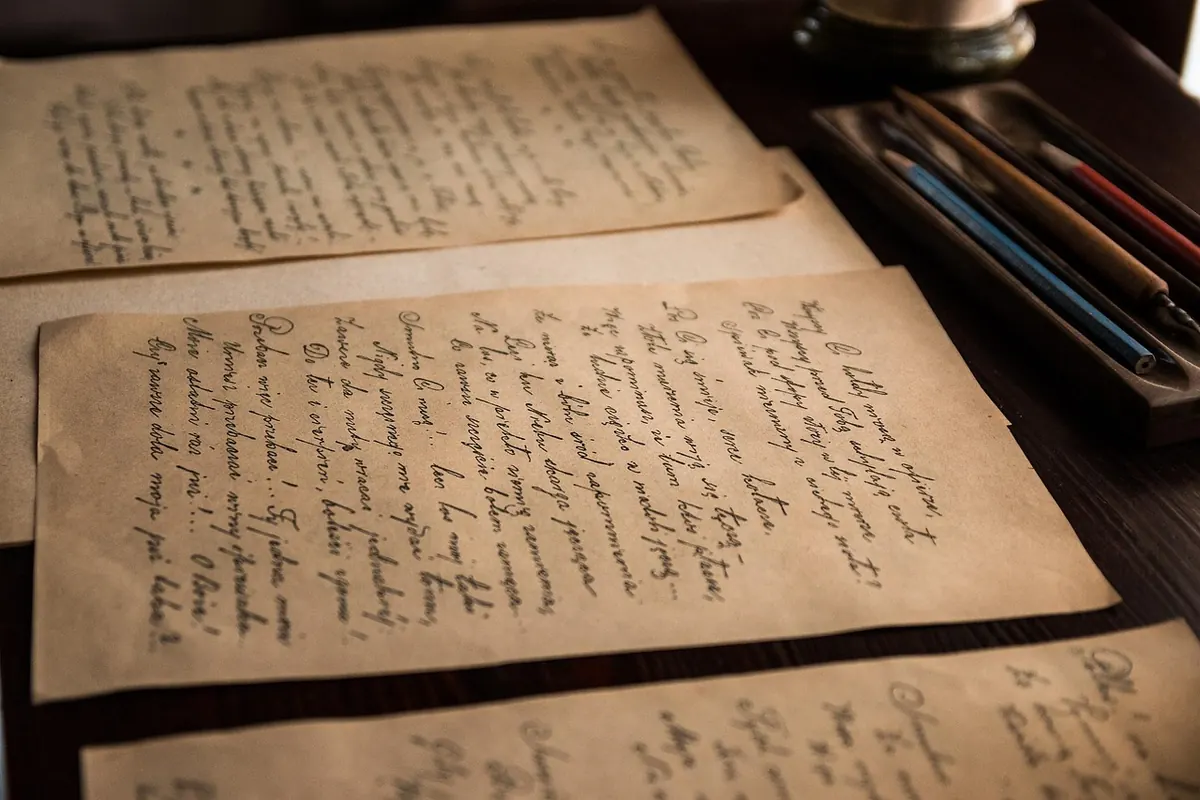
Handwriting adds another layer. A thorn (þ) written carelessly looks like a y, which is why "Ye Olde" anything is really "The Olde". Secretary and court hands abbreviate heavily, with marks and strokes standing in for letters, and the same name may appear with four spellings in four documents. Place names repeat across counties, so a Newton or a Norton in one record may lie nowhere near the one you assume.
Before drawing conclusions, be able to say what the document actually says. Copy difficult passages letter by letter, use the county record office's reference material, and take a palaeography course if you plan to work in original records at any scale.
Building a Pedigree That Holds
Work backwards one generation at a time, and stop when the evidence stops. Record what you could not find; negative results save you from chasing the same missing will twice. Cite every fact to a specific document, with the call number and the date you consulted it. Keep a separate list of "possible" and "probable" relationships, and be strict about which side of the line each one sits on.
Prefer original records to abstracts, and abstracts to indexes — but use all three. When a claim matters, for an inheritance, a legal matter, or publication, have it reviewed by someone with medieval records and palaeography experience, and take proper legal advice before acting on a descent you believe you have proved.
Genealogy rewards patience more than cleverness. A pedigree you can defend line by line, with its gaps admitted, is worth far more than one that reaches a king in six easy steps.
Photo: padrinan / Pixabay